|
Cetreliopsis asahinae (M. Satô) Randlane & A. Thell |
|
|
|
|
|
Nomenclatural data
|
Cryptog. Bryol. Lichénol. 16: 46, 1995. – Cetraria asahinae M. Satô, Res. Bull. Saito Ho-On Kai Mus. 11: 12, 1936. – Type: [Russia] Kuril Islands, Kunashiri, Tomarimura, 16.08.1923, Yasuda (DUKE – isotype)
|
|
Morphology
|
Description – see Randlane et al. 1995.
Typical characters. Thallus dorsiventral, upper surface yellow, lower surface black. Lobes rather wide (8–15 mm). Pseudocyphellae on the upper surface surrounded with a black rim and bearing black emergent projections; on the lower surface they appear as small white spots. Medulla Pd + red.
|
|
Chemistry
|
|
Contains usnic acid in the cortex (rarely absent); protocetraric (major compound), fumarprotocetraric and physodalic (±) acids in the medulla.
|
|
Remarks
|
|
The taxon is readily distinguished by the apparent pseudocyphellae on the upper surface, an unusual feature for this group. The pseudocyphellae on the lower side are less conspicuous. The medullary chemistry – that is the presence of protocetraric and fumarprotocetraric acids – and the occurence of pseudocyphellae on both surfaces is typical for this genus.
|
|
Ecology and distribution
|
|
|
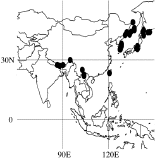
Distributed in Bhutan; in China – in Taiwan, Xizang (Wei 1991) and Yunnan provinces; in India and Nepal (Cetraria rhytidocarpa sensu Awasthi in Awasthi 1983), Japan (Yoshimura 1979), Russian Far East – in Habarovsk and Primorye regions and the Kuril Islands (Randlane et al. 1995, Skirina 1998); in South Korea (Park 1990) and Vietnam (Randlane et al. 1995) (Fig. 4). Grows in mixed and deciduous forests, epiphytic on living and fallen trees (e.g. Abies, Picea, Quercus, Rhododendron, Tilia) at lower and medium altitudes (up to 3500 m).
|
|
|
Species pages available
asahinae
|
|
|
|
Literature
Randlane, T. & Saag, A. 2004. | Randlane, T., Saag, A. & Obermayer, W. 2001. | Randlane, T., Thell, A., & Saag, A. 1995.
Contact |